Extra Virgin Olive Oil Benefits: 15 Evidence-Based Facts
Author: RVLNSV PRASAD
Updated On: October 2026
About Us
Author Bio
Editorial Policy
Contact Us
Introduction
Extra virgin olive oil is more than a cooking ingredient. It is a source of unsaturated fat and naturally occurring plant compounds that can form part of a balanced eating pattern. Researchers have studied it extensively because olive oil is a central component of the Mediterranean diet, a dietary pattern associated with better cardiovascular health.
However, not every claim about olive oil deserves equal attention. Evidence supporting heart health is stronger than evidence suggesting that olive oil directly improves hair growth, treats digestive problems, or prevents every chronic disease.
The difference matters when choosing what to eat every day. A useful nutrition habit should be supported by evidence, fit your budget, and work with your existing meals rather than promising dramatic results.
Recent research continues to examine whether extra virgin olive oil offers advantages over more heavily processed olive oil. A March 2026 review from Harvard Health discusses the potential importance of its antioxidant and anti-inflammatory compounds while explaining what remains uncertain.
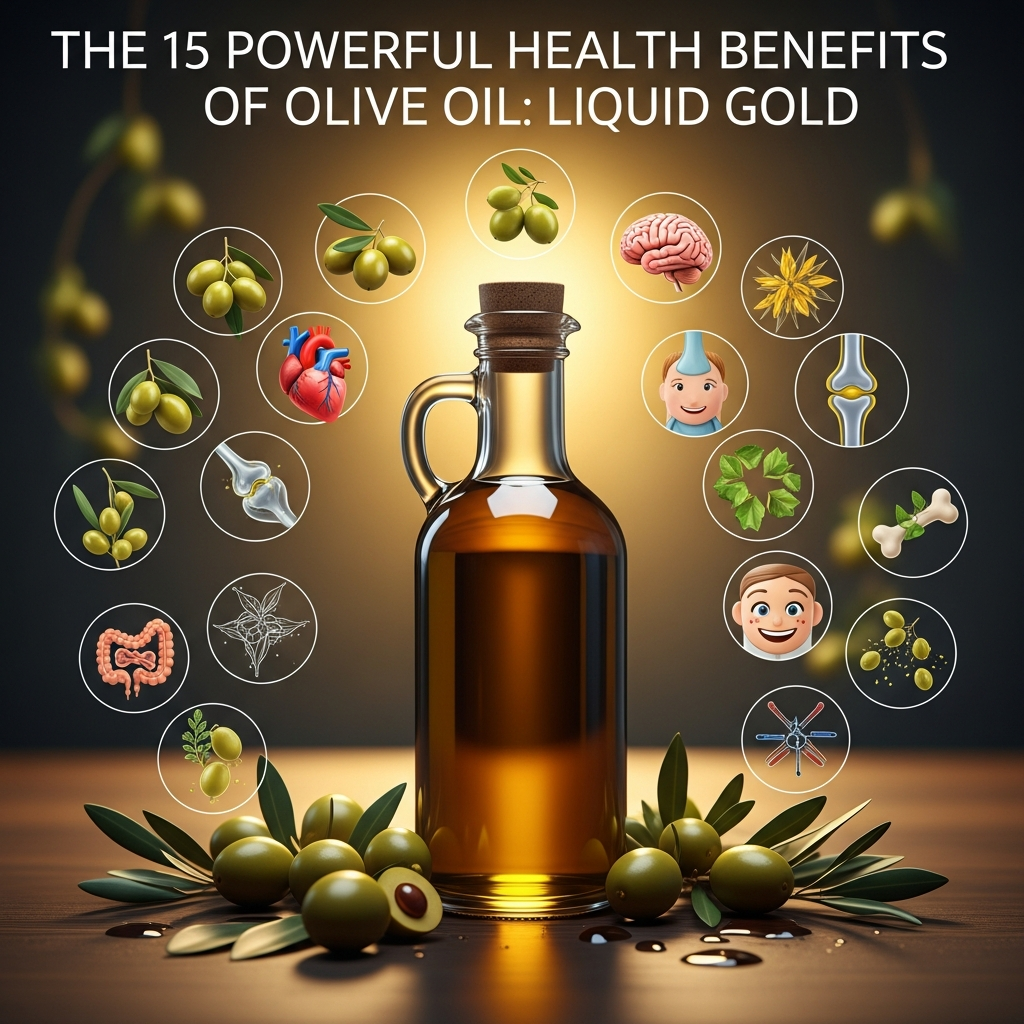
This guide explores 15 potential health benefits of extra virgin olive oil, what research actually supports, how to use it in everyday meals, and how to choose a quality product without spending unnecessarily.
Quick Answer: What Are the Benefits of Extra Virgin Olive Oil?
Extra virgin olive oil provides monounsaturated fats and naturally occurring compounds, including polyphenols. When used instead of butter or other sources of saturated fat, it can help support a heart-healthy eating pattern.
The best-supported benefits relate to cardiovascular health and the advantages of replacing some saturated fats with unsaturated fats. Other possible benefits, including effects on inflammation, blood sugar regulation, and healthy aging, are being studied, but the strength of evidence varies.
Olive oil is calorie-dense, so the amount you use and the foods it replaces matter.
Key Takeaways
- Extra virgin olive oil contains monounsaturated fats and naturally occurring polyphenols.
- Replacing some saturated fats with unsaturated fats can help improve LDL cholesterol levels.
- Research on Mediterranean-style eating supports the role of olive oil as part of a broader healthy dietary pattern.
- Extra virgin olive oil generally retains more naturally occurring phenolic compounds than refined olive oil.
- Olive oil is not a medicine for diabetes, heart disease, inflammation, or digestive problems.
- One tablespoon provides roughly 120 calories, so portion awareness remains important.
- The most useful approach is to replace less healthy fats rather than simply adding extra oil to every meal.
What Is Extra Virgin Olive Oil?
Extra virgin olive oil is made from olives using mechanical processes rather than chemical refining. It must meet established chemical and sensory standards to qualify for this grade.
Compared with refined olive oil, extra virgin olive oil generally retains more of the naturally occurring phenolic compounds that contribute to its flavor, aroma, and antioxidant activity.
Olive oil contains several important components:
| Component | Role in the diet |
|---|---|
| Oleic acid | A monounsaturated fatty acid that makes up a large share of olive oil’s fat |
| Polyphenols | Plant compounds studied for antioxidant and other biological effects |
| Vitamin E | A fat-soluble nutrient that helps protect cells from oxidative damage |
| Energy | Approximately 120 calories per tablespoon |
| Saturated fat | Present in smaller amounts than monounsaturated fat |
For more detail on the differences between extra virgin and regular olive oil, see Harvard Health’s explanation of olive oil processing and health.
One important point: extra virgin olive oil is still mostly fat. Its benefits depend on the overall diet and how it is used, not simply on its label.
15 Health Benefits of Extra Virgin Olive Oil
1. Supports Heart Health
Cardiovascular health is one of the best-studied areas of olive oil research. Olive oil contains substantial amounts of monounsaturated fat, which can help improve blood cholesterol levels when it replaces some saturated fat in the diet.
For example, replacing butter with olive oil in a meal is different from adding olive oil on top of the butter you already use.
A major clinical trial, PREDIMED, studied 7,447 adults at high cardiovascular risk. Participants assigned to a Mediterranean diet supplemented with extra virgin olive oil experienced fewer major cardiovascular events than the control group during follow-up. The study was republished after problems with some randomization procedures were identified, so its results should be interpreted with that methodological history in mind.
You can read the corrected PREDIMED trial in the New England Journal of Medicine.
The finding supports a Mediterranean-style dietary pattern that includes olive oil. It does not prove that olive oil alone prevents heart attacks.
2. Helps Support Healthy LDL Cholesterol Levels
Low-density lipoprotein, or LDL cholesterol, is often called bad cholesterol because elevated levels can contribute to plaque buildup in arteries.
Replacing some saturated fat with unsaturated fat can help lower LDL cholesterol. Olive oil can be one practical way to make that dietary change.
The American Heart Association’s guidance on dietary fats explains why choosing unsaturated fats instead of saturated fats is important for cardiovascular health.
Olive oil is not a substitute for cholesterol-lowering medication when medication is medically necessary. People with elevated cholesterol should consider their overall diet, activity level, medical history, and treatment plan.
3. Provides Antioxidant Compounds
Extra virgin olive oil contains polyphenols and vitamin E. These compounds have antioxidant properties, meaning they can interact with processes involving oxidative damage.
Oxidative stress occurs when the production of reactive molecules exceeds the body’s ability to manage them. It is involved in several biological processes and has been studied in relation to aging and chronic disease.
Laboratory findings can help explain how olive oil compounds behave, but they do not automatically prove that consuming olive oil prevents a particular disease.
For a useful overview of the differences between extra virgin and refined olive oil, read Harvard Health’s review of extra virgin olive oil.
4. May Help Support a Healthy Inflammatory Response
Some olive oil compounds have been investigated for their potential effects on inflammation-related pathways. Researchers are particularly interested in phenolic compounds found in extra virgin olive oil.
However, inflammation is a complex biological process. It is not accurate to claim that olive oil eliminates inflammation or treats inflammatory diseases.
The most sensible approach is to include olive oil within a dietary pattern that also contains vegetables, fruit, legumes, nuts, whole grains, and other nutritious foods.
This broader pattern is more meaningful than relying on one ingredient to manage inflammation.
5. Can Support a Balanced Approach to Weight Management
Olive oil contains fat, which contributes to the energy content of a meal and can help make food satisfying. Replacing some saturated fats with olive oil may improve the quality of your diet without requiring you to remove all fats.
However, olive oil does not directly melt body fat or automatically increase metabolism enough to produce weight loss.
One tablespoon provides approximately 120 calories. Adding several tablespoons to meals without adjusting other food portions can increase total calorie intake.
A practical strategy is to measure the amount used in cooking or dressing instead of pouring freely from the bottle. For weight-management guidance, the CDC’s healthy weight resources explain the importance of sustainable eating and activity habits.
6. May Help Support Blood Sugar Management
Research has investigated the relationship between olive oil, Mediterranean-style eating, and blood glucose regulation. Replacing certain less healthy fats and building balanced meals may help support overall metabolic health.
Still, the effects of an entire dietary pattern cannot be attributed to olive oil alone.
If you have diabetes or prediabetes, olive oil can fit into a balanced eating plan, but it does not replace medication, glucose monitoring, or advice from your healthcare team.
For practical guidance, the American Diabetes Association’s nutrition information provides information about building an eating pattern that supports diabetes management.
7. Contributes to Nutrient Absorption From Vegetables
Some vitamins and plant compounds are fat-soluble. Eating vegetables with a source of fat can help the body absorb certain nutrients, including carotenoids found in colorful vegetables.
A small amount of olive oil in a salad or cooked vegetable dish can therefore be a useful culinary choice.
For example, a carrot and tomato salad with a measured amount of olive oil combines vegetables with dietary fat. The benefit comes from the meal as a whole rather than from an assumption that olive oil makes every nutrient more effective.
This is also a practical reason to avoid unnecessarily removing all fat from vegetable-based meals.
8. Supports a Mediterranean-Style Eating Pattern
The Mediterranean diet is not a single-food diet. It emphasizes vegetables, fruits, beans, lentils, nuts, whole grains, and other minimally processed foods, with olive oil serving as a major source of fat.
The PREDIMED clinical trial found fewer major cardiovascular events in groups assigned to Mediterranean diets supplemented with extra virgin olive oil or nuts compared with the control diet.
The results support the broader dietary pattern, including its food choices and dietary counseling. They should not be interpreted as proof that adding olive oil to an otherwise poor diet produces the same results.
9. Provides Vitamin E
Vitamin E is a fat-soluble nutrient that contributes to protecting cells from oxidative damage. Olive oil supplies some vitamin E, although the exact amount varies with the product and serving size.
A balanced diet can provide vitamin E through several foods, including nuts, seeds, and certain vegetable oils. Olive oil is one possible contributor rather than the only source.
People who are concerned about nutrient deficiencies should focus on their overall dietary pattern rather than relying on one oil to meet all nutritional needs.
10. May Contribute to Healthy Aging
Studies have examined whether olive oil consumption is associated with lower rates of certain chronic diseases and premature death.
A large observational study published in the Journal of the American College of Cardiology found that people who reported higher olive oil consumption had lower risks of total and cause-specific mortality. The authors studied U.S. adults over time, but observational research cannot establish that olive oil alone caused the differences.
Read the 2022 olive oil and mortality study on PubMed.
Healthy aging depends on multiple factors, including diet, physical activity, sleep, smoking status, access to healthcare, and social circumstances. Olive oil can be one part of a healthy eating pattern, not a guarantee of longer life.
11. May Support Brain Health Through Overall Diet Quality
Researchers have studied Mediterranean-style eating patterns in relation to cognitive health. Olive oil is one component of these patterns, alongside vegetables, fruit, legumes, nuts, and other foods.
It would be an overstatement to promise that olive oil improves memory or prevents dementia on its own. Research on an entire dietary pattern does not establish that one ingredient produces the same effects independently.
A more useful approach is to build meals that provide a variety of nutrients and maintain other healthy habits, including physical activity, adequate sleep, and management of cardiovascular risk factors.
12. Can Make Vegetable-Based Meals More Satisfying
A meal that includes vegetables, protein, fiber-rich carbohydrates, and some unsaturated fat can be more satisfying than a meal consisting of vegetables alone.
Olive oil can contribute to flavor and texture, which may make nutritious meals easier to enjoy regularly. This can be particularly useful for people who struggle to include vegetables in their daily routine.
However, adding oil is not the only way to improve flavor. Herbs, spices, lemon, garlic, and roasted vegetables can also make meals more appealing.
The practical goal is to create balanced meals that you can enjoy consistently.
13. May Offer Advantages Through Its Naturally Occurring Polyphenols
Extra virgin olive oil generally contains more phenolic compounds than refined olive oil because it undergoes less processing.
These compounds are one reason researchers investigate whether extra virgin olive oil offers benefits beyond those associated with monounsaturated fat alone.
Harvard Health’s 2025 research summary on extra virgin olive oil discusses research in which higher extra virgin olive oil intake was associated with lower cardiovascular risk in a Mediterranean-diet study population.
An association is not definitive proof that the phenols themselves caused the difference. Product quality, diet, and other factors may also matter.
14. Can Be Used as a Practical Alternative to Butter in Some Meals
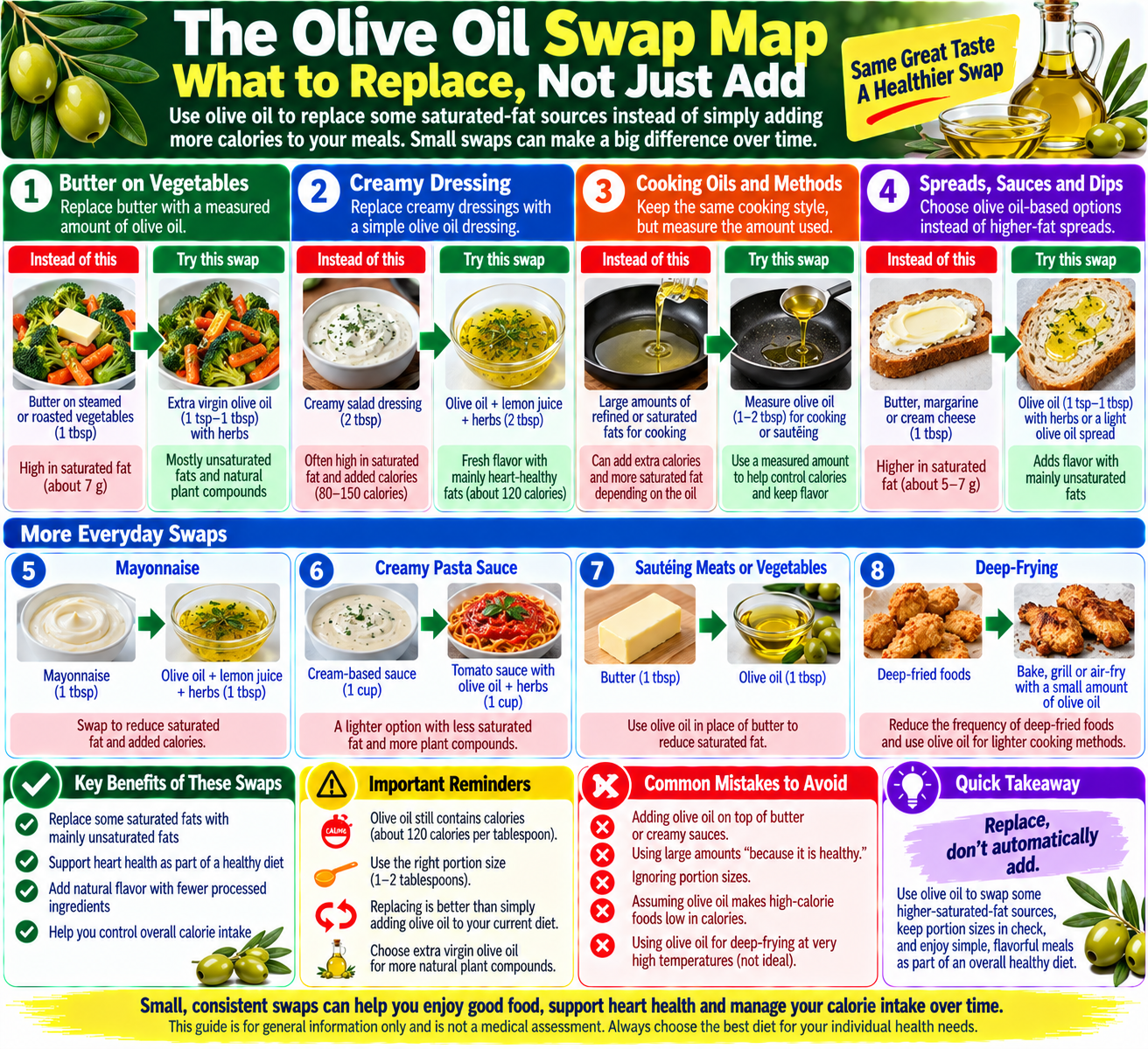
One useful way to incorporate olive oil is to replace some butter or other sources of saturated fat in cooking.
For instance, olive oil can be used in a vegetable sauté, salad dressing, or some baking recipes. The substitution changes the type of fat in the meal, although the flavor and texture may also change.
This is more meaningful than simply adding olive oil without removing anything else.
The American Heart Association’s dietary fat guidance explains the value of choosing unsaturated fats more often than saturated fats.
15. Offers a Versatile Way to Improve Everyday Meals
Olive oil is easy to use in a wide variety of foods. It can be added to salads, used for sautéing vegetables, drizzled over cooked beans, or incorporated into a simple dressing.
This flexibility can help people maintain a balanced eating pattern without depending on expensive supplements or complicated recipes.
The advantage is practical rather than magical: a familiar ingredient can make healthy meals easier to prepare and enjoy.
Extra Virgin Olive Oil vs. Regular Olive Oil
The main difference is how the oils are produced and the amount of naturally occurring compounds they retain.
| Feature | Extra virgin olive oil | Refined or regular olive oil |
|---|---|---|
| Processing | Mechanically produced under standards for extra virgin grade | May include refined oil blended with virgin olive oil |
| Flavor | Often more noticeable, fruity, bitter, or peppery | Usually milder |
| Naturally occurring phenols | Generally higher | Often lower after refining |
| Monounsaturated fat | High | High |
| Calories | Similar | Similar |
| Best reason to choose it | Flavor and retention of more natural phenolic compounds | Mild flavor and suitability for certain cooking needs |
Harvard Health explains that extra virgin olive oil retains more phenols than refined oil, but definitive evidence that it prevents more heart attacks or other diseases than regular olive oil remains limited. Read the full explanation.
The choice does not need to be all or nothing. A suitable oil that fits your budget and cooking needs can be part of a healthy diet.
How Much Extra Virgin Olive Oil Should You Use Daily?
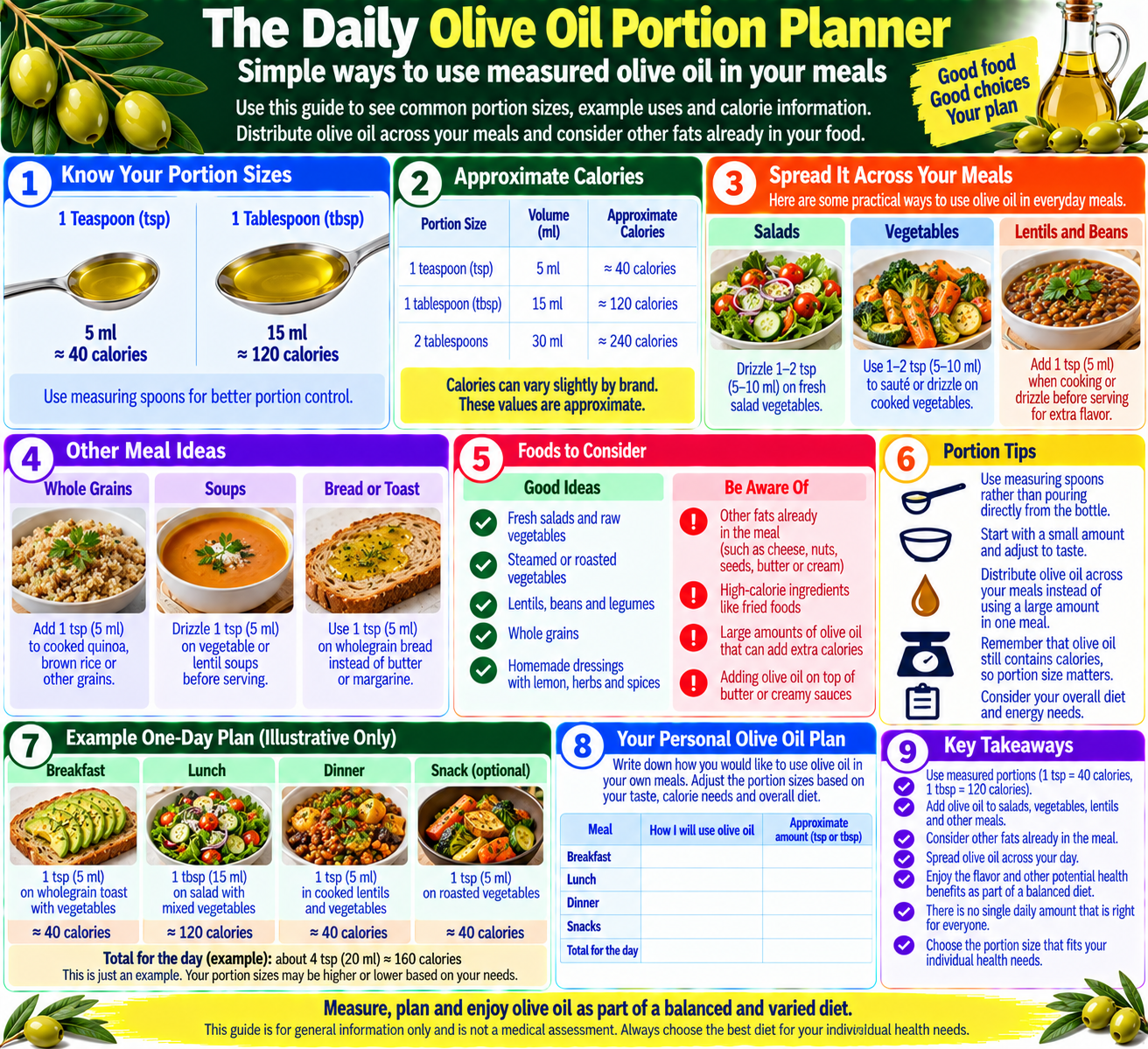
There is no single amount that everyone must consume. Your needs depend on your overall energy intake, food choices, health circumstances, and the fats you already eat.
A tablespoon contains roughly 120 calories, so even a nutritious oil can contribute substantial energy when used generously.
A simple approach is to begin with a measured amount for cooking or dressing and adjust according to the rest of your diet.
| Everyday use | Practical approach |
|---|---|
| Salad dressing | Measure a small amount and combine with lemon juice, herbs, or vinegar. |
| Vegetable sauté | Use enough to cook the food without leaving a large excess in the pan. |
| Dal, beans, or lentils | Add a measured amount for flavor if it suits the dish. |
| Roasted vegetables | Lightly coat the vegetables rather than soaking them. |
| Replacing butter | Substitute olive oil in suitable recipes rather than adding both automatically. |
Some clinical studies have used higher olive oil intakes as part of a structured Mediterranean-diet intervention. Those study protocols should not be treated as universal daily prescriptions.
Easy Ways to Use Olive Oil in Indian Meals
You do not need to adopt an unfamiliar diet to use olive oil. It can fit into familiar meals when the flavor and cost make sense.
1. Vegetable sauté
Use a measured amount of olive oil to sauté vegetables such as beans, carrots, capsicum, or spinach. Add spices and herbs according to your preference.
2. Simple salad dressing
Mix olive oil with lemon juice, black pepper, and a small amount of salt. Use it to dress cucumber, tomato, onion, and other salad vegetables.
3. Dal or bean dishes
A small amount of olive oil can be used when preparing certain lentil or bean dishes. Traditional cooking oils can also be appropriate choices; olive oil is not mandatory for healthy eating.
4. Roasted vegetables
Lightly coat cauliflower, carrots, or other vegetables before roasting. Avoid adding large amounts simply because the oil is considered healthy.
5. Replace some butter in suitable recipes.
Olive oil can replace butter in certain savory dishes and recipes. Because butter and oil have different textures, the substitution may require changes to the recipe.
A Practical Olive Oil Quality Checklist
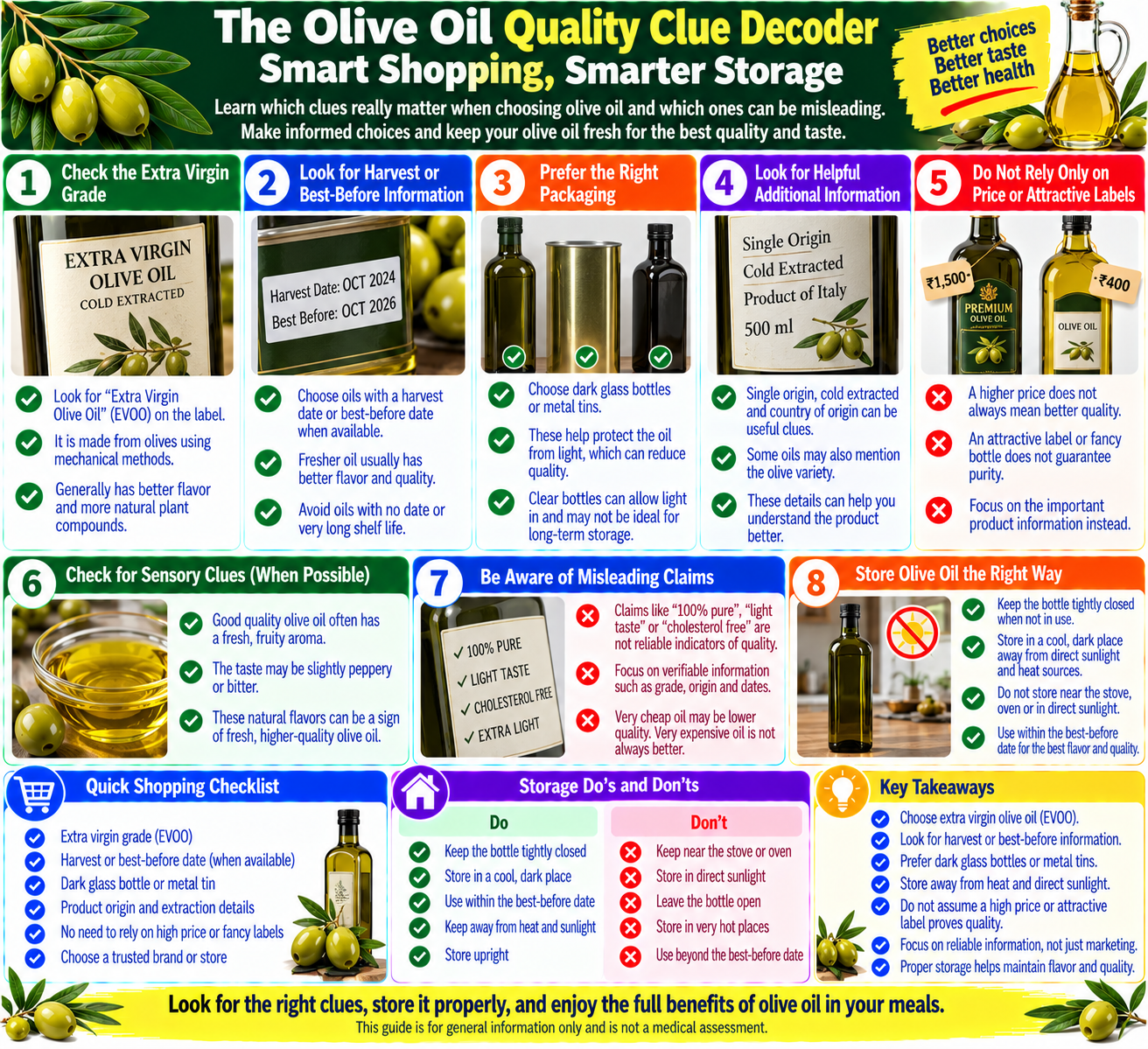
Choosing a good product is not always straightforward. Price alone does not establish freshness or authenticity, and a dark bottle does not guarantee that an oil is genuine.
- Check the grade: Look for extra virgin olive oil if you want that specific grade.
- Read the label: Check the producer, origin information, and any harvest or best-before details available.
- Check packaging: A dark bottle or opaque container can help protect the oil from light.
- Consider freshness: Choose a product with reasonable shelf life and store it properly after opening.
- Inspect the seal: Avoid containers with damaged seals or signs of leakage.
- Use your senses cautiously: Fresh olive oil may have a fruity aroma, bitterness, or peppery sensation. These qualities alone do not prove authenticity.
Keep the bottle tightly closed in a cool, dark cupboard away from the stove. Heat, light, and air can contribute to quality deterioration over time.
Common Mistakes to Avoid
Adding olive oil without replacing other fats
Olive oil can improve the type of fat in your diet, but it still contributes calories. Replacing some butter or another saturated-fat source is often more useful than adding extra oil to every meal.
Believing that all olive oils have identical properties
Extra virgin and refined olive oils differ in processing, flavor, and phenolic content. Both contain substantial monounsaturated fat, but the naturally occurring compounds are not identical.
Expecting rapid weight loss
Olive oil is not a fat-burning treatment. Sustainable weight management requires attention to overall food intake, activity, sleep, and other health factors.
Using olive oil as a substitute for medical care
It should not replace prescribed cholesterol medication, diabetes treatment, or medical advice for an existing condition.
Assuming that expensive oil is always better
Price can reflect factors such as origin, production, packaging, and brand positioning. It is not a guarantee of freshness or health effects.
Applying food-grade olive oil to every skin problem
Olive oil is sometimes promoted as a natural skin remedy, but it is not suitable for every skin type or condition. If you have eczema, persistent irritation, or damaged skin, seek advice from a qualified healthcare professional rather than assuming that kitchen oil will help.
What About Olive Oil for Skin and Hair?
Olive oil is commonly discussed as a moisturizer for dry skin and hair. However, evidence for treating specific skin or hair conditions is limited, and food-grade oil is not a substitute for a product formulated for a particular medical need.
Some people may find that oil temporarily softens dry hair or skin. Others may experience irritation or find that it worsens their skin concerns.
Avoid making claims that olive oil cures eczema, reverses hair loss, or repairs skin damage. If you experience persistent dryness, itching, a rash, or hair loss, an appropriate evaluation is more useful than relying on a home remedy.
Personal Experience: How to Make This Section Credible
Readers often appreciate practical observations, but personal stories should reflect real experience rather than serve as proof of a health benefit.
If you regularly use olive oil, describe the specific meals in which you use it, how you measure portions, and whether you prefer its flavor in salads or cooked dishes. Explain what you actually noticed without attributing changes in cholesterol, digestion, energy, or skin health to olive oil unless you have reliable evidence.
For example, you might describe replacing butter in one recipe or using a measured amount of oil in a vegetable dish. That is a useful first-person observation without promising a medical result.
Editorial note: Keep this section only after adding your own genuine experience. Do not publish an invented personal health story or a fictional patient example as fact.
Frequently Asked Questions
1. What are the main benefits of extra virgin olive oil?
The best-supported advantages relate to its monounsaturated fat content and its role in a healthy dietary pattern. It also contains naturally occurring phenolic compounds and vitamin E.
2. Is extra virgin olive oil better than regular olive oil?
Extra virgin olive oil generally retains more phenolic compounds and has a stronger flavor. Both types contain substantial monounsaturated fat. Evidence that extra virgin olive oil is definitively superior for preventing clinical disease remains incomplete.
3. Can I use olive oil every day?
Yes, it can be part of a balanced diet for most people. The amount should fit your overall energy needs and dietary pattern.
4. Does olive oil help lower cholesterol?
Replacing some saturated fat with unsaturated fat can help lower LDL cholesterol. Olive oil is one possible source of unsaturated fat, but it does not replace medical treatment when needed.
5. Can olive oil help with weight loss?
Not by itself. It can fit into a weight-management diet, but it is calorie-dense. Portion size and the overall dietary pattern matter.
6. Is olive oil suitable for Indian cooking?
It can be used in many Indian dishes, including vegetable sautés and salads. Choose an oil suitable for the cooking method and consider flavor, cost, and personal preference.
7. Does olive oil prevent heart disease?
Evidence supports the role of olive oil within a Mediterranean-style dietary pattern. It is not accurate to say that olive oil alone guarantees protection against heart disease.
8. Is olive oil good for skin?
It may soften dry skin for some people, but it is not appropriate for every skin type or condition. Persistent skin symptoms need suitable care.
9. How should I store olive oil?
Keep it tightly closed in a cool, dark place away from heat and direct sunlight. Follow the product’s storage instructions and avoid keeping it open for unnecessarily long periods.
10. Can olive oil replace all other cooking oils?
Not necessarily. Different oils have different flavors, costs, and uses. A balanced diet can include a range of appropriate unsaturated fats.
Conclusion
Extra virgin olive oil is a useful source of monounsaturated fat and naturally occurring plant compounds. Research supports its role in a healthy dietary pattern, particularly when it replaces some sources of saturated fat.
However, its benefits should not be exaggerated. Olive oil alone does not guarantee weight loss, prevent every chronic disease, or treat medical conditions. Its contribution depends on the amount used, the foods it replaces, and the quality of the overall diet.
Start with practical changes that fit your routine. Measure the amount you use, include vegetables and other nutrient-rich foods, and choose a product that suits your budget and cooking needs.
A sustainable eating pattern is more valuable than relying on a single ingredient as a health solution.
Author Note
Author: RVLNSV PRASAD
This article explains the potential benefits and limitations of extra virgin olive oil using established nutrition research and practical dietary guidance. The content is intended for general education and should not be interpreted as individualized medical advice.
Medical Disclaimer
This article is for informational purposes only and is not a substitute for professional medical advice, diagnosis, or treatment. Consult a qualified healthcare professional about dietary changes if you have a medical condition, food intolerance, or specific nutritional needs.
Fitness Disclaimer
Olive oil is a food, not a workout supplement or treatment for exercise-related injuries. For general health, combine a balanced diet with physical activity suited to your abilities and medical circumstances.
Sources
- Harvard Health, March 2026: Is extra virgin olive oil better for your heart than regular olive oil?
- Harvard Health, December 2025: Extra virgin olive oil may be healthier than regular olive oil
- New England Journal of Medicine, 2018: Primary prevention of cardiovascular disease with a Mediterranean diet supplemented with extra virgin olive oil or nuts
- Journal of the American College of Cardiology, 2022: Consumption of olive oil and risk of total and cause-specific mortality among U.S. adults
- Harvard Health: Is extra virgin olive oil extra healthy?
- American Heart Association: Dietary fats and heart health
- American Diabetes Association: Food and nutrition guidance
- Centers for Disease Control and Prevention: Healthy weight and healthy habits
- 12 Benefits Of Green Tea For Weight Loss
- 4 Easy Recipes for Wholesome Nutrition on a Budget
- Aromatherapy for Stress Relief and Relaxation: A Comprehensive Guide
- 6 Natural Foods to Improve Digestion and Gut Health: A Comprehensive Guide
- 5 Plant-Based Meals for Healthy Weight Loss: A Comprehensive Guide